
The CBS show, 60 Minutes, had a lot to say about Rev. Al Sharpton. It’s an interesting segment about his life, his politics, and how he has changed over the years.

The CBS show, 60 Minutes, had a lot to say about Rev. Al Sharpton. It’s an interesting segment about his life, his politics, and how he has changed over the years.

Is this pastor a crook or a victim? Why he got 10 years in prison.

Alabama tornado victims get by through faith and football.
click to read

A new census bureau survey said that black women are the least likely of all ethnic groups to jump the broom. Why is that?

CNN’s Roland Martin had some interesting things to say about "The Donald” – Click to read.

by Dr. Boyce Watkins, Your Black World
South Park is a show that takes no prisoners. Sometimes they can be brutal, and when your name is mentioned on the show, you might as well prepare to be embarrassed. The latest victim of the show is Tyler Perry, who is presented as “Funny Bot,” a woman in a dress who tells silly stereotypical jokes that make you laugh over and over again. Every time Funny Bot throws out a catch phrase (“Oh lawud, this chicken sho is hot!”), someone hands him a dollar. He is also, by the way, presented as the greatest threat to all of man-kind by President Barack Obama (you can see a clip by clicking here).
click to read
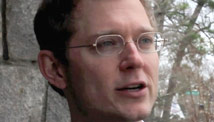
Editor's Note: The Rev. David Lewicki is co-pastor of North Decatur Presbyterian Church in Decatur, Georgia. He is a graduate of Yale University and Union Theological Seminary and was ordained in 2005 by the Presbyterian Church (U.S.A.).
By the Rev. David Lewicki, Special to CNN
On Sunday night I watched the news as it crescendoed around the president’s speech declaring the death of Osama bin Laden. The talking heads worked capably with what few details they had. On the split screen, familiar spliced video footage replayed what little most of us know — or care to know — about bin Laden: wearing a turban, sitting drinking tea, a long salt and pepper beard, speaking to friends, crouching holding a machine gun, skyscrapers smoking.
Your Black World Reports
Desmond Tutu -- former Anglican Archbishop of Cape Town, South Africa -- says South Africa should not be embarrassed about its policies to combat AIDS.
"For many years we were embarrassed in international gatherings for what we were not doing in fighting AIDS. We therefore thank the Minister of Health, Aaron Motsoaledi, for the change in policy....It is a very rare privilege and honor for us the older ones to say we are passing the baton to you the young to carry on with the fight against this pandemic." - Desmond Tutu

 Closing out a remarkable year in music, Ann Nesby , the two-time Grammy award winning former lead vocalist to the Sounds of Blackness readies the release of her latest musical offering ‘Ann Nesby's a Soulful Christmas' for the 2009 holiday season.
 Some students on the doorsteps of graduation may struggle with their future plans, but Temple alum and R&B singer Rafiya has not been one of those people.

Group holds a conference to promote Black Marriage. Click here to watch the video trailer! You can learn more by visiting their website at HappilyEverAfterTheMovie.com.
 PJ Morton won't be the first preacher's kid to sing secular music, and he isn't likely to be the last!
Unlike those before him who were ostracized and condemned by traditional churchgoers and religious radicals for singing non-sacred sounds, Morton has decided to educate churchgoers rather than rebelling against them.
The 28-year-old singer, who is the son of renowned pastors Bishop Paul S. Morton (Changing a Generation Full Gospel Baptist Church in Atlanta) and Dr. Debra B. Morton (Greater St. Stephen Full Gospel Baptist Church in New Orleans), has written a new book called 'Why Can't I Sing About Love?' that dispels the myth that all Christian singers must record and perform gospel music.
"I hope that the book causes people to see how big God is and that His affects reach far beyond the church and church music," he explained. "Also, I want people to realize that if we believe that the Bible is truly God's word, we can't overlook certain parts, specifically the book of love songs in the Bible. He created those as well."
Click to read.

Rather than letting Fox News sound bites define Jeremiah Wright for you, take a look at his bio.
Life, Love and Legacy
Rev. Dr. Jeremiah A. Wright, Jr.
The Rev. Dr. Jeremiah A. Wright, Jr. is a man of faith, a homiletic genius, a theological scholar and a pastor’s pastor. He is a family man who enjoys spending quality time with his wife, children, grandchildren, extended family and friends.
Steeped in Family Tradition and Educational Achievements
Born in Philadelphia, Pennsylvania, Dr. Wright is a son of the parsonage and hails from a family steeped in educational achievements. A third generation family member to matriculate at Virginia Union University, Dr. Wright followed in the footsteps of his maternal grandfather, Dr. Hamilton Martin Henderson who graduated from Virginia Union with a Bachelor of Arts degree in the late 1800s and finished seminary at Virginia Union in 1902. His father, Dr. Jeremiah A. Wright, Sr., also graduated from Virginia Union with two undergraduate degrees and from the seminary with a Master of Divinity degree in 1938. The senior Wright also received a Master of Sacred Theology degree (S.T.M.) from the Lutheran Theological Seminary at Philadelphia.
Dr. Wright’s mother, Dr. Mary Henderson Wright, also graduated from Virginia Union and earned her first master’s degree before age 19 from the University of Chicago. She also earned a second master’s degree and her doctorate in education from the University of Pennsylvania.
Foundational Strengths
With four earned degrees, a Bachelor of Arts and Master of Arts in English from Howard University, a Master of Divinity from the University of Chicago Divinity School and a Doctor of Ministry from the United Theological Seminary, Dr. Jeremiah A. Wright, Jr. grew up in a home where reading books was a daily way of life. Wright read a wide range of sources from the Greek philosophers and Shakespeare to African American authors such as Carter G. Woodson (the Father of African American History) to Sterling Brown (one of the Harlem Renaissance artists), as well as one of Dr. Wright’s college professors.

President Barack Obama whispers into First Lady Michelle Obama's ear during the White House Cinco de Mayo celebration this year Photo: PETE SOUZA/THE WHITE HOUSE
Their regular Friday "date nights" make the television news, and there was a stir recently when they caught Air Force One for a night at the theatre in Manhattan.
This weekend, in the aftermath of the D-Day celebrations, they are in Paris with their young daughters - having turned down an invitation for dinner with President Nicolas Sarkozy and his wife Carla in favour of a more intimate family event.

As a college professor, I have regularly challenged black scholars to step outside the walls of the ivory tower to engage the black community. Sometimes, the purity of our chosen profession can lead us to feel that sharing our skill set with the world dilutes the quality of our work. I do not agree. Intelligence means nothing if it is not accompanied by courage, creativity and compassion for other human beings.
The same can be said about spirituality. Jesus was not a man who stayed inside the walls of his church, selfishly enjoying the spirit of God. He did not get so obsessed with the bureaucracy and goals of the church that he forgot about the infinite power that God provides when achieving a greater good. While many pastors yell and scream from the pulpit, some have forgotten that old expression, "What would Jesus do?"
Pastor Adepoju Oyemade brings such a spirit to the people of Nigeria and they love him for doing so.
I met "Pastor Poju" during a recent trip to Nigeria. I was immediately impressed with the manner by which the pastor has utilized recent freedoms in the country to take God to the people. But he has not only taken God to the people, he has used the power of free enterprise to introduce them to a whole new world. His semi-annual event, called "The Platform," is one of the most celebrated events in the entire country. The pastor brings together 20,000 citizens of Lagos, Nigeria and teaches them the value of entrepreneurship and tools for running a successful business. His work in the community earns him respect, and it is the kind of work that should be used as an economic development model for black pastors and business owners throughout the world.
Q: Tell us about "The Platform." Where did the idea come from and what gave you the passion to pursue it?
Continue reading Dr Boyce: Should Black Pastors Stay inside the Church?

When Alysa Stanton officially becomes a rabbi next month, she'll be walking into history.
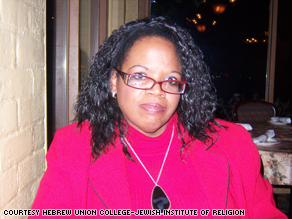
Alysa Stanton, 45, will become the first African-American woman to be ordained as a rabbi next month.

She'll become the first African-American woman ever to be ordained as a rabbi and the first African-American rabbi to lead a majority white congregation, according to the Hebrew Union College-Jewish Institute of Religion.
Stanton, 45, will be ordained June 6 in Cincinnati, Ohio, where she received her master's degree from the HUC-JIR, which is the rabbinical school of the Reform movement. Then in August, she will begin her new job at Congregation Bayt Shalom in Greenville, North Carolina -- long a Conservative synagogue and now affiliated with both the Reform and Conservative movements.
She describes her new position with great enthusiasm, saying the congregation -- while small -- has a lot of children, a sign of a bright future. And she says the congregation is vibrant and the region, where East Carolina University and a major medical center are located, is dynamic as well.
"My goals as a rabbi are to break down barriers, build bridges and provide hope," Stanton told CNN. "I look forward to being the spiritual leader of an inclusive sacred community that welcomes and engages all."
The HUC says the milestone reflects the diversity that permeates Jewish life.


Dr Boyce Watkins
I read today about the financial compensation package of pastor Brad Braxton of the New Riverside Church in Manhattan. Here is the breakdown of Braxton’s compensation:
The total value of the package is estimated to be $600,000 per year.
All I can say is “wow”. No disrespect to this man or his congregation, but he would NOT be preaching at my church. What was most problematic about the church’s decision to give Braxton such a ridiculous compensation package was that they didn’t seem to clear it with the membership, many of whom are filing suit over Braxton’s pay. As a Finance Professor, I must admit that I personally become uncomfortable hearing men and women of God talking about money more than I do. I must disagree with Rev. TD Jakes, who said that “Jesus is a product”. Sorry brother, Nikes are a product. Cheeseburgers are a product. Jesus is a spirit that should lead us to pursue a good that is greater than our bank accounts. I am not sure how many pastors agree with that assessment.

BET’s 106 and Gospel has been officially canceled. But please tell me this: Why in the “hayell” would you air a gospel show at 12 noon on Sundays? Aren’t people in church at that time?
I swear…..some people can’t get a damn clue without the intervention of the Lord.


With relative certainty it can be said that 90 to 93% of Roman Catholic priests in the United States do not get sexually involved with minors. The discrepancy between those numbers and the report of the Bishops' Commission (4% priest abusers) can be reconciled and justified if one accounts for the under reporting of victims and perpetrators plus the reports from well monitored areas like Boston and New Hampshire where the figures of abusers runs over 7 and 8%. Many religious communities sustain a population of abusers at 10%. Where the safety of children is concerned it is necessary to give a wide berth rather than restrictive estimate to the dangers they face.
Of course sexual activity of any adult with a minor is criminal. In addition it is clearly a violation of celibacy that is expected of Catholic priests. To pretend that sex with minors is the only or even the most frequent violation of celibacy by Catholic priests and bishops is a fiction of the fifth magnitude.
I have never disputed the power of the ideal of celibacy—the complete and unflinching sacrifice of one's sexual life for the undivided service of others.
Nor have I ever advanced or advocated the argument that simply discarding the rule of mandatory celibacy will make priests more sexually responsible or mature.
The crisis of celibacy is far more complex than any change in law alone can remedy. But celibacy is undeniably a problem for priests.
To understand the problem of clerical celibacy and to debate cogently it is only right to seek what is known about how celibacy is practiced by those who profess it. And a great deal is already known.
A study of Swiss priests published on May 12, 2003, revealed that 50% of that clergy had mistresses. Father Victor Kotze, a South African sociologist conducted a survey of the priests in his country (1991) and found that 45% had been sexually active during the previous two year period.
Pepe Rodriguez published his book length study of the sexual life of clergy in Spain (La Vida sexual del Clero 1995). He concluded that among practicing priests 95% masturbate; 7% are sexually involved with minors and 26% have "attachments to minors;" 60% have sexual relations, 20% have homosexual relations.

Grammy-winning gospel singer Benjamin (BeBe) Winans has been charged with misdemeanor domestic assault after a dispute with his ex-wife in Nashville.
An arrest warrant filed Wednesday said 46-r-old Winans got into an argument with his ex-wife, Debra, aboutyea their children at her home.
"He pushed me to the ground in front of my children," Debra Winans told CNN.
America is a less Christian nation than it was 20 years ago, and Christianity is not losing out to other religions, but primarily to a rejection of religion altogether, a survey published Monday found.

Survey finds percentage of of Americans identifying themselves as Christian has fallen over two decades.

Seventy-five percent of Americans call themselves Christian, according to the American Religious Identification Survey from Trinity College in Hartford, Connecticut. In 1990, the figure was 86 percent.
William Donohue, president of the Catholic League said he thinks a radical shift towards individualism over the last quarter-century has a lot to do it.
"The three most dreaded words are thou shalt not," he told Lou Dobbs. "Notice they are not atheists -- they are saying I don't want to be told what to do with my life."
At the same time there has been an increase in the number of people expressing no religious affiliation.
The survey also found that "born-again" or "evangelical" Christianity is on the rise, while the percentage who belong to "mainline" congregations such as the Episcopal or Lutheran churches has fallen.

By Rev. Nicholas A. Pearce
Though often portrayed as a singular, monolithic entity, many scholars debate whether “the Black Church” truly exists. While the distinctive differences that have so long divided predominantly African-American Baptist, Methodist, Pentecostal, and non-denominational churches are apparent, a potentially pernicious predicament currently demands our attention. While many people focus on the differences that exist among denominations and local churches, our attention must turn to one critical challenge we face within many of our churches. Young people are always labeled “The Church of Tomorrow,” which suggests two things: (1) that their spiritual gifts, leadership, and contributions are less meaningful, insignificant, and/or invalid at present and (2) the presupposition that tomorrow is promised. As countless young people leave the Church and still others sit restlessly in the pews waiting for a tomorrow deferred to finally arrive, the question we must confront is clear – when is “tomorrow” today?
The situation looks much like a track relay race. Our parents in the ministry were passed the baton of the Word of God by their parents and find themselves running the race of leadership as the next generation prepares in anticipation of receiving the baton in the exchange zone. Our forerunners in the ministry generally fall into one of three typological categories as they approach the exchange zone. (1) Some of our parents finish strong and cleanly pass on the baton to the next generation to run the next leg of the race. (2) Others of our parents, hearing the acclamation of the cheering crowd, decide to run an extra lap and skip the waiting generation in the exchange zone. Other racers with fresh legs soon pass by as these overzealous individuals run out of energy and solemnly realize that the baton was meant to be passed to the next generation. The overlooked and disenfranchised next generation ponders their befallen state and searches for other constructive outlets for their energy and talent that was intended to be expended in the race. (3) Still others of our parents approach the exchange zone with timidity, fearing that they will slowly fade out of the picture as they relinquish possession of the baton to a seemingly untested new generation. The combination of the outgoing generation’s insecure ambivalence to let go and the waiting generation’s consequent loss of self-assurance, the baton exchange is botched. No matter how well the previous lap had been run, no matter how talented the next runner may have been, the baton was dropped; the race was lost.
Does the Church have the luxury of leaving its young people and their gifts in a perpetual holding pattern, never to land? Can the Church afford to continue to mistakenly equate seniority with maturity as young people are prepared yet overlooked in the exchange zone? Will the Apostle Paul’s 1 Corinthians 12 treatise on unity in the body of Christ and the importance of each member thereof extend to a generation waiting to lead? Even a cursory glance at the state of the “Black Church” reveals an institution wrestling with its identity, struggling with being attractive while remaining authentic and grappling with the challenges and realities of a new day. Will an intensifying focus on devising better methods instead of making better men and women for the Kingdom of God cause the 21st century Black Church to institutionally marginalize itself? God forbid – but let us earnestly wait for the day when tomorrow becomes today and the next generation carries forward the baton of leadership.
Rev. Nicholas A. Pearce serves as Associate Minister of the Apostolic Church of God in Chicago, IL and is a doctoral candidate at the Northwestern University Kellogg School of Management. Contact: npearce1@alum.mit.edu
If anybody had a reason to doubt whether Tyler Perry has become one of the most bankable brands in all of movies, be skeptical no longer.

The domestic dramedy maestro's latest release, Tyler Perry's "Madea Goes to Jail," ran away with a big victory on the typically slow Academy Awards weekend, grossing a hefty $41.1 million, according to early estimates from Media by Numbers.
That opening sum is the biggest of all time for a Tyler Perry film, besting the $30 million debut of 2006's "Madea's Family Reunion." Too, it's the top bow in the history of indie studio Lionsgate, improving upon all the Tyler Perry and "Saw" flicks that came before it. The movie's per-theater average of $20,236 ranks in the top 40 for all wide openers ever.
And, no surprise, "Madea Goes to Jail" achieved all this success with a solid A CinemaScore grade from a crowd that included mostly older women.  Watch Tyler Perry talk about his success »
Second place went to "Taken," which added another $11.4 million to its four-week tally, bringing said total to $95.2 million. Fellow strong holdover "Coraline" (No. 3) was next with $11 million.
"He's Just Not That Into You" (No. 4) declined a sharp 56 percent to bank $8.5 million on its third weekend. And Best Picture favorite "Slumdog Millionaire" rounded out the top five with $8.1 million -- a sum that brings its domestic total to $98 million.


